What if nothing changes?

Keith Kahn-Harris
How can we not see this present period as a hinge point, or a crack in history, or a gamechanger? For British-born Jews like myself who were born after the Second World War, no other national event has impacted on our lives so dramatically, so profoundly, as the pandemic has. Within the organised Jewish community, the multiple challenges that the pandemic has posed and will continue to pose, touch on existential questions: The ‘excess’ deaths, the vulnerability of the old and immuno-suppressed, the financial survival of Jewish institutions, how we pray together, how we build community together, how we produce Jewish culture together, and so on. All this and persistent antisemitism too.
That British Jewish culture has changed during the pandemic is undeniable. The rush to put events and services online has enabled a more global Jewish conversation at the same time as it has change what being together in communal spaces means. The financial pressures have raised difficult questions about the viability of communal institutions. Some Jewish voices have become more prominent, others have been muted. Some forms of Jewish cultural production have been silenced and their long-term future put into question, others have shown their worth like never before.
In this context, to raise the possibility that this radical short-term transformation will not result in fundamental long-term change might seem absurdly contrarian. In fact, my strong suspicion is that we will indeed see long-term changes. Yet it seems essential that we do not make assumptions here and that, amidst the long-termist speculations we also give space for the voice of ‘deep time’ to be heard.
It may be that part of the experience of living through shock, trauma and rapid change is speculating about long-term transformation. And sometimes the sense that ‘nothing will ever be the same’ – for good or for ill – is justified. The Black Death and the two World Wars, for example, did transform the world in multiple ways, as many of those who lived through them expected. Still, amid the eerie experience of accelerated time that historical shocks bring about, it is not always easy to distinguish a historical blip from a historical step change.
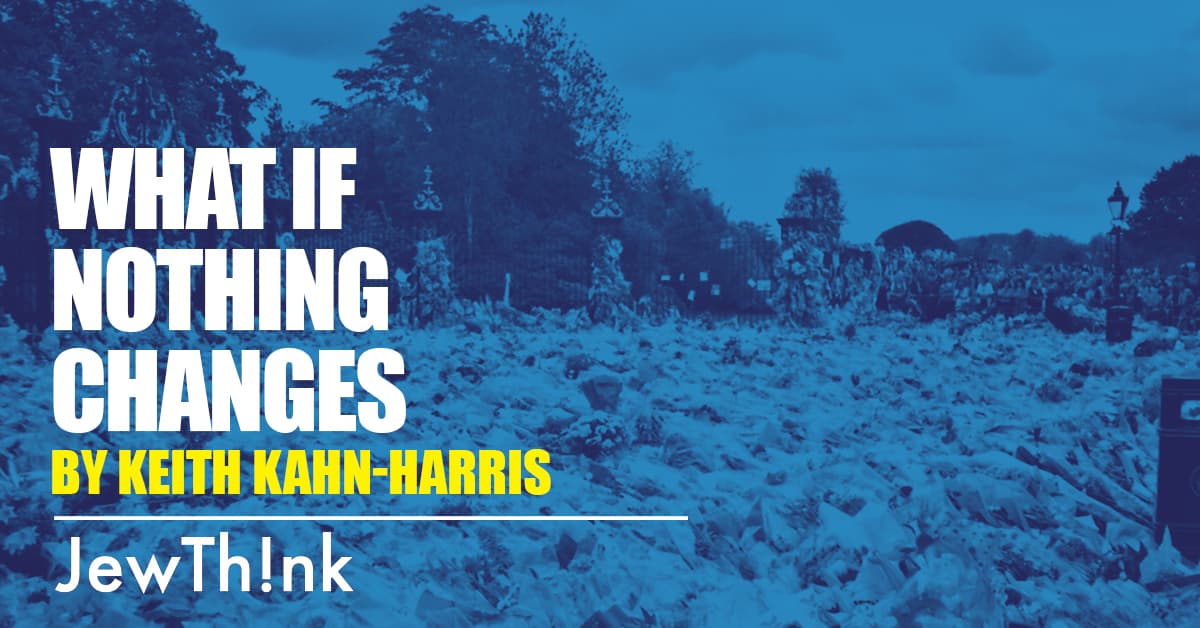
I hope it doesn’t trivialise the discussion to bring up the death of Princess Diana at this point. It seems absurd, perhaps obscene, to compare the consequences of a car crash in Paris to a pandemic that has taken hundreds of thousands of lives. But during those strange days during the late summer of 1997, not only did Diana dominate the news and bring thousands of mourners into the streets, there was feverish speculation that, after this, the media and the royal family would never be the same. Moreover, the overflowing of publicly-expressed emotion was treated as a sign that something profound had shifted within British culture. Those speculations all turned out to be completely wrong. The death of Diana only had trivial long-term consequences.
I raise the death of Diana not to provide a cautionary tale against punditry and public hysteria, but to suggest that, as a species, we may not be particularly well-adapted to understanding how historical conjunctures intersect with the longue durée, particularly when we are in the midst of experiencing those very same conjunctures. The reason for this may have something to do with our desire to find patterns within and make stories out of the chaotic flux of time. Yet, if we do not do so, we risk anomie and chaos. As in Walter Benjamin’s meditations on Paul Klee’s Angelus Novus, the act of abandoning historicism requires that we find the bravery to see history as ‘rubble’, whose implications for the future cannot be known.